





Can You Terminate Out of System? Why It Matters For Coaches

In this article:


<!-- wp:paragraph -->
<p><strong><em>Use Code: <strong>digdakotas30</strong> in the coupon code area</em></strong></p>
<!-- /wp:paragraph -->
<!-- wp:paragraph -->
<p><strong><em><a href="https://www.instagram.com/prepdigdakotas/?hl=en">Follow on Instagram@prepdigdakotas</a></em></strong></p>
<!-- /wp:paragraph -->
<!-- wp:image {"id":955256,"width":"288px","height":"auto","align":"left"} -->
<figure class="wp-block-image alignleft is-resized"><img src="https://prepdig.com/wp-content/uploads/sites/5/2026/03/image_9ce8ca.png" alt="" class="wp-image-955256" style="width:288px;height:auto" /></figure>
<!-- /wp:image -->
<!-- wp:paragraph -->
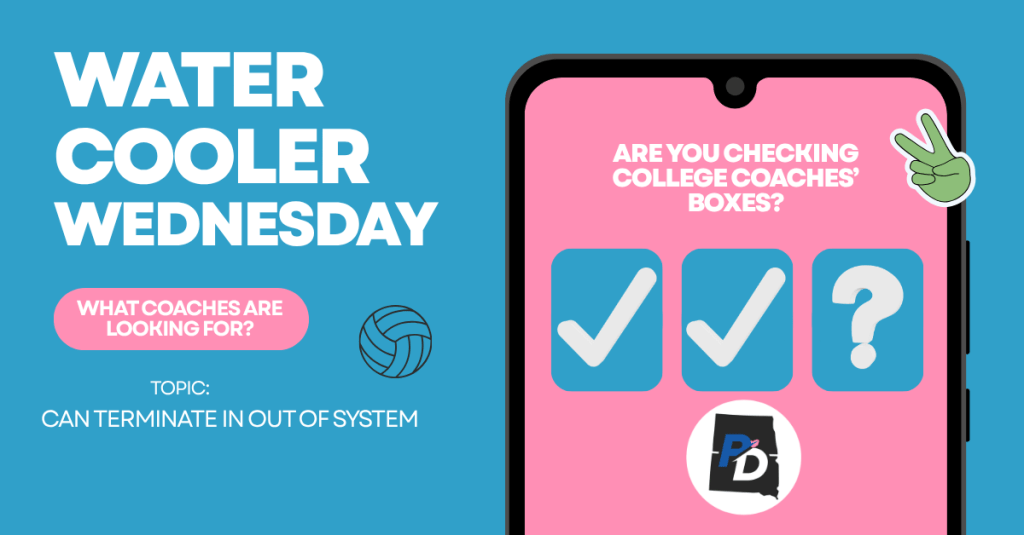
<p>Volleyball is not played perfectly—and college coaches know that. For every in-system swing with a clean pass and fast tempo, there are multiple rallies where things break down. Passes drift, setters are forced off the net, and timing is disrupted. In those moments, the game shifts. It's no longer about running a perfect offense—it's about who can still produce when everything isn't. That's where separation happens, and it's exactly where college coaches are locked in when they're evaluating talent.</p>
<!-- /wp:paragraph -->
<!-- wp:paragraph -->
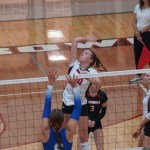
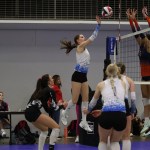
<p>Out-of-system volleyball shows up constantly at every level. It might be a pass that pulls the setter off the net, a free ball that turns into a scramble, or a high ball pushed outside with no tempo. These are not ideal situations. There's no perfect approach window, no clean rhythm, and often a well-formed block waiting. It becomes a test of composure, adaptability, and decision-making. Coaches are not just watching who gets swings—they're watching who can handle these moments with control and purpose.</p>
<!-- /wp:paragraph -->
<!-- wp:paragraph -->
<p>Terminating out of system is one of the most misunderstood parts of the game. It's not just about swinging harder or trying to overpower the block. At the next level, that approach leads to errors more often than points. What separates players is their ability to adjust. Can they clean up their footwork mid-play? Can they stay balanced through contact? Can they read the block and defense before they leave the floor? Most importantly, can they make the right decision in a split second? The athletes who stand out are the ones who can slow the game down in their mind while everything around them speeds up.</p>
<!-- /wp:paragraph -->
<!-- wp:paragraph -->
<p>You can see this skill set showing up in players who are already learning how to manage these moments at a high level. <strong>[player_tooltip player_id='722409' first='Peyton' last='Saxlund']</strong> continues to show the ability to stay terminal even when the set isn't perfect, using her vision and swing control to create scoring options. <strong>[player_tooltip player_id='724985' first='Aurey' last='Morris']</strong> brings a steady six-rotation presence, adjusting in transition and finding ways to stay productive through broken plays. <strong>[player_tooltip player_id='807009' first='Parker' last='Lutman']</strong> stands out with her physicality and ability to still generate offense when tempo breaks down, while <strong>[player_tooltip player_id='724973' first='Lucy' last='Falk']</strong> shows composure in extended rallies, making smart decisions instead of forcing swings.</p>
<!-- /wp:paragraph -->
<!-- wp:paragraph -->
<p><strong>[player_tooltip player_id='752419' first='Kynsli' last='Gillmore']</strong> continues to develop into a pin who can manage high balls with confidence, and <strong>[player_tooltip player_id='755127' first='Maddy' last='Vliem']</strong> shows the ability to stay available and effective even when the offense isn't in rhythm. <strong>[player_tooltip player_id='778698' first='Ella' last='Harden']</strong> brings a balanced approach, mixing control and aggression to keep defenses off balance, while <strong>[player_tooltip player_id='923443' first='Alayna' last='Ann Arthur']</strong> continues to separate with her ability to read the block and adjust mid-swing. <strong>[player_tooltip player_id='729589' first='Sylea' last='Sykes']</strong> shows flashes of being able to create her own opportunities, especially in out-of-system situations where creativity matters.</p>
<!-- /wp:paragraph -->
<!-- wp:paragraph -->
<p>Players like <strong>[player_tooltip player_id='753570' first='Libby' last='Kranz']</strong> and <strong>[player_tooltip player_id='891456' first='Payton' last='Sargent']</strong> continue to build consistency in these moments, learning how to stay composed and make productive decisions under pressure. <strong>[player_tooltip player_id='845031' first='Addelyn' last='Jensen']</strong> brings a steady presence, showing the ability to manage the game and avoid unnecessary errors when the play breaks down. <strong>[player_tooltip player_id='731410' first='Kamdyn' last='Borge']</strong> continues to show growth in how she approaches these swings, staying aggressive while learning control. And <strong>[player_tooltip player_id='831344' first='Dani' last='Vanderwerff']</strong> is another athlete trending upward, showing the ability to stay engaged and find ways to contribute even when the play isn't clean.</p>
<!-- /wp:paragraph -->
<!-- wp:paragraph -->
<p>Sometimes, the best out-of-system play isn't a kill—it's a smart, controlled swing that keeps the rally alive and avoids giving away a point. That layer is critical. Coaches are evaluating not only who can terminate, but who can manage the game when termination isn't there. A high-level player understands the difference. They use high hands when the block is pressing, roll to open space when defenders commit, and stay aggressive without becoming reckless. They don't disappear in broken plays, and they don't panic.</p>
<!-- /wp:paragraph -->
<!-- wp:paragraph -->
<p>This also extends beyond just front-row attackers. Coaches are paying close attention to players who stay available in transition, including back row attackers who can still be an option when the setter is forced off the net. Being able to create offense out of chaos—whether from the pin or the back row—adds another level of value and makes a player far more difficult to defend.</p>
<!-- /wp:paragraph -->
<!-- wp:paragraph -->
<p>Where this becomes even more important is late in sets. Anyone can take a good swing early, but when the score tightens and every point matters, out-of-system situations become more frequent and more pressure-filled. This is where coaches find their answers. Who do you trust at 22–22? Who can take a high ball, make a smart decision, and either score or keep the rally alive? Those are the moments that stick.</p>
<!-- /wp:paragraph -->
<!-- wp:paragraph -->
<p>At the collegiate level, matches are rarely clean. Serve pressure is more aggressive, blocking schemes are more disciplined, and defensive systems are more advanced. That means out-of-system situations happen more often, not less. Coaches need players who can be reliable outlets when plays break down, who can turn non-ideal situations into productive ones, and who don't give away points when things aren't perfect.</p>
<!-- /wp:paragraph -->
<!-- wp:paragraph -->
<p>This is also a skill that has to be developed. Players who want to separate themselves need to train outside of perfect drills. That means working on high balls, off-tempo sets, and broken play scenarios. It means learning to read the game earlier, expanding shot selection, and staying available in transition. It also requires confidence—the belief that even when the play isn't clean, something positive can still be created.</p>
<!-- /wp:paragraph -->
<!-- wp:paragraph -->
<p>At every tournament, there are players who look strong when everything is in system. But the ones who stand out to college coaches are the ones who can handle the chaos. They find ways to produce, they manage risk, and they compete through imperfect volleyball. They don't just rely on ideal situations—they create their own opportunities.</p>
<!-- /wp:paragraph -->
<!-- wp:paragraph -->
<p>That's the difference between a good player—and one that gets recruited.<em><strong>~Theresa@prepdigdakotas</strong></em></p>
<!-- /wp:paragraph -->
<!-- wp:separator -->
<hr class="wp-block-separator has-alpha-channel-opacity" />
<!-- /wp:separator -->
<!-- wp:separator -->
<hr class="wp-block-separator has-alpha-channel-opacity" />
<!-- /wp:separator -->
<!-- wp:heading -->
<h2 class="wp-block-heading">Thank you to all my readers for making this journey possible. My goal has always been simple—to shine a light on athletes at every level, from Division I to NAIA, and give them a platform to keep chasing their love for the game. Every player deserves a shot, and I'm honored to help tell their stories.</h2>
<!-- /wp:heading -->
<!-- wp:paragraph -->
<p><br><strong>Please help us continue to grow this positive platform for players by spreading the word and encouraging your friends to subscribe at PrepDig.com. With your support, we can create unforgettable memories and experiences!</strong></p>
<!-- /wp:paragraph -->
<!-- wp:paragraph -->
<p><strong><br>This journey is created by the village—athletes, coaches, families, and subscribers.</strong></p>
<!-- /wp:paragraph -->
<!-- wp:heading {"level":4} -->
<h4 class="wp-block-heading"><em>Thank you for making it all possible! ~ Theresa Hickman</em></h4>
<!-- /wp:heading -->
<!-- wp:heading {"level":3} -->
<h3 class="wp-block-heading"><em>Follow on Instagram@prepdigdakotas</em></h3>
<!-- /wp:heading -->
<!-- wp:paragraph -->
<p>If You Enjoyed This Article, Help Us Keep the Momentum Going<br>🔥 Players<br>Use this article to grow. Take notes, study what makes others stand out, and apply it to your own journey. Want to take the next step? Reach out to a featured athlete and introduce yourself. Build connections, not just stats.</p>
<!-- /wp:paragraph -->
<!-- wp:paragraph -->
<p>📣 Club Coaches & Directors<br>Share this with your teams. If your athletes are highlighted, celebrate them. Post it, tag us, and help their stories reach the right eyes. Visibility matters.</p>
<!-- /wp:paragraph -->
<!-- wp:paragraph -->
<p>🎯 College Coaches<br>Tag these athletes in University Athlete and evaluate them as potential fits for your program. We continue tracking their growth and impact through Recruitable Credentials, the indicators coaches trust. Follow their progress with us and keep these prospects on your radar.</p>
<!-- /wp:paragraph -->
<!-- wp:paragraph -->
<p>🙏 Parents & Supporters<br>Thank you for being the backbone of this movement. Your subscriptions, shares, and belief in your athletes make this work possible. Help a player get discovered — share this article and tag @PrepDigDakotas.</p>
<!-- /wp:paragraph -->
<!-- wp:paragraph -->
<p>🚀 Upgrade to a PrepDig+ Subscription<br>Access exclusive rankings, deeper analysis, and the full Prospect Index to follow every athlete's journey.</p>
<!-- /wp:paragraph -->
Use Code: digdakotas30 in the coupon code area

Access all of Prep Dig
Continue reading this article and more.
Continue Reading
Already a subscriber?
Log in