






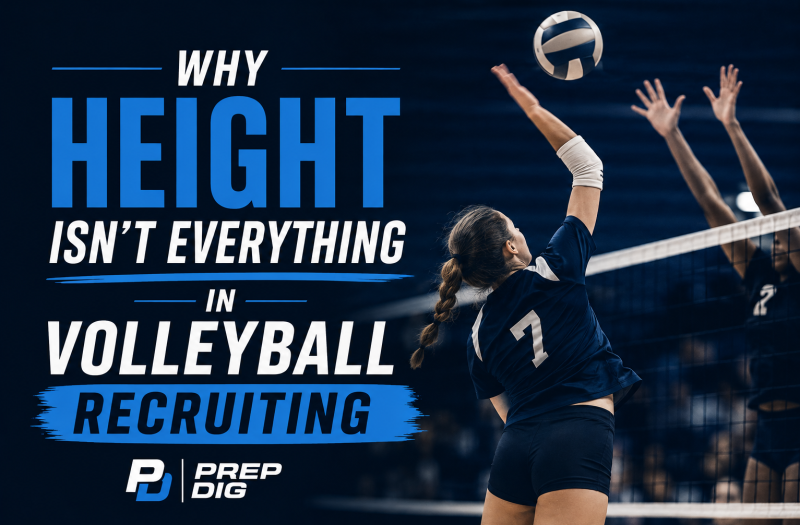
Why Height Isn’t Everything in Volleyball Recruiting

<!-- wp:paragraph -->
<p>Volleyball is a sport where height can certainly be an advantage, especially at certain positions and levels of play. </p>
<!-- /wp:paragraph -->
<!-- wp:paragraph -->
<p>However, being tall alone does not make an athlete a college level recruit, just as being undersized does not eliminate someone from playing at the next level. </p>
<!-- /wp:paragraph -->
<!-- wp:paragraph -->
<p>College coaches evaluate the complete player, looking at athleticism, skill, volleyball IQ, and the impact an athlete can make on the court.</p>
<!-- /wp:paragraph -->
<!-- wp:heading -->
<h2 class="wp-block-heading">Athleticism Can Make Up the Difference</h2>
<!-- /wp:heading -->
<!-- wp:paragraph -->
<p>Height is only one part of an athlete's physical profile, and athleticism can often help make up the difference. A shorter pin or middle with a high vertical, explosive approach, and quick lateral movement can play much bigger than their listed height. </p>
<!-- /wp:paragraph -->
<!-- wp:paragraph -->
<p>Speed and explosiveness also allow athletes to transition faster, get to the pins, and compete above the net. College coaches are looking at how athletic you are on the court, not just the number listed next to your height.</p>
<!-- /wp:paragraph -->
<!-- wp:heading -->
<h2 class="wp-block-heading">Volleyball IQ Separates Players</h2>
<!-- /wp:heading -->
<!-- wp:paragraph -->
<p>Volleyball IQ is one of the most valuable qualities a recruit can bring to the court, and it has nothing to do with height. Players who can read hitters, understand the block, anticipate plays, and recognize open areas of the court consistently put themselves in better positions to succeed. </p>
<!-- /wp:paragraph -->
<!-- wp:paragraph -->
<p>Smart attackers also know when to take a big swing and when to use a shot or tool the block instead. The ability to make quick decisions and understand the game can separate a good athlete from a great volleyball player.</p>
<!-- /wp:paragraph -->
<!-- wp:heading -->
<h2 class="wp-block-heading">Being Great at Your Position Still Matters</h2>
<!-- /wp:heading -->
<!-- wp:paragraph -->
<p>A 6'2" athlete is not automatically a better recruit than a 5'10" athlete simply because of their size. College coaches need players who can execute the skills required at their position at a high level. </p>
<!-- /wp:paragraph -->
<!-- wp:paragraph -->
<p>Passing, defending, setting, blocking, attacking, and serving consistently are ultimately what allow a player to make an impact on the court. Size may get a coach's attention, but your ability to perform your position is what gives them a reason to keep watching.</p>
<!-- /wp:paragraph -->
<!-- wp:heading -->
<h2 class="wp-block-heading">Versatility Makes You More Recruitable</h2>
<!-- /wp:heading -->
<!-- wp:paragraph -->
<p>Versatility can be a major advantage in recruiting, especially for athletes who may be considered undersized for their position. A pin hitter who can pass, defend, attack from either side, hit out of the back row, and potentially fill another position gives a college coach more ways to use them. </p>
<!-- /wp:paragraph -->
<!-- wp:paragraph -->
<p>Instead of being viewed only as an undersized outside hitter, that athlete becomes someone who can contribute to the team in multiple roles. The more ways you can impact the game, the more opportunities you give a coach to find a place for you on their roster.</p>
<!-- /wp:paragraph -->
<!-- wp:heading -->
<h2 class="wp-block-heading">Coaches Recruit for Their System</h2>
<!-- /wp:heading -->
<!-- wp:paragraph -->
<p>Not every college coach is searching for the exact same type of volleyball player. Some programs prioritize size and physicality, while others may place greater value on speed, ball control, versatility, or athletes who thrive in a fast offense. </p>
<!-- /wp:paragraph -->
<!-- wp:paragraph -->
<p>This is why finding the right program fit is such an important part of the recruiting process. Rather than focusing only on the level you want to play at, look for programs where your strengths and style of play match what the coaching staff values.</p>
<!-- /wp:paragraph -->
<!-- wp:heading -->
<h2 class="wp-block-heading">The Things You Can't Measure</h2>
<!-- /wp:heading -->
<!-- wp:paragraph -->
<p>Some of the most important qualities a recruit brings to a program cannot be measured in inches or listed on a stat sheet. Competitiveness, work ethic, leadership, coachability, communication, and energy can completely change the way a coach evaluates a player. </p>
<!-- /wp:paragraph -->
<!-- wp:paragraph -->
<p>Coaches want athletes who make the people around them better and bring consistent effort regardless of the score or situation. Height may be easy to measure, but the qualities that make someone a great teammate and competitor can ultimately be just as valuable.</p>
<!-- /wp:paragraph -->
<!-- wp:heading -->
<h2 class="wp-block-heading">Final Thoughts</h2>
<!-- /wp:heading -->
<!-- wp:paragraph -->
<p>At the end of the day, height can be an advantage in volleyball, but it does not define how far an athlete can go. </p>
<!-- /wp:paragraph -->
<!-- wp:paragraph -->
<p>Focus on the things you can control - your athleticism, skill, volleyball IQ, versatility, and the energy you bring to the court. </p>
<!-- /wp:paragraph -->
<!-- wp:paragraph -->
<p>College coaches are looking for players who can make their program better, and there are plenty of ways to do that beyond how tall you are.</p>
<!-- /wp:paragraph -->
Volleyball is a sport where height can certainly be an advantage, especially at certain positions and levels of play.

Access all of Prep Dig
Continue reading this article and more.
Continue Reading
Already a subscriber?
Log in