





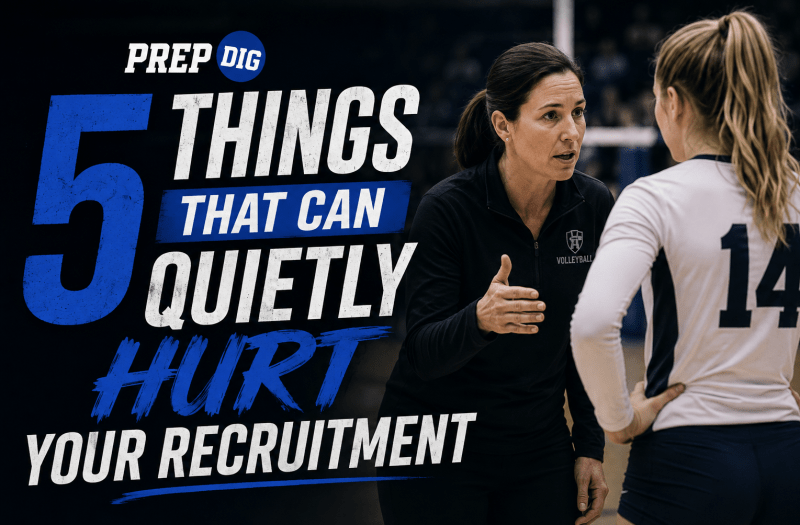
5 Things That Can Quietly Hurt Your Recruitment

<!-- wp:paragraph -->
<p>Recruiting isn't always won or lost by how many kills you have or how impressive your highlight reel looks. </p>
<!-- /wp:paragraph -->
<!-- wp:paragraph -->
<p>College coaches are evaluating everything from the way you communicate to how you respond when things don't go your way, and sometimes the smallest details can change how they view you as a recruit. </p>
<!-- /wp:paragraph -->
<!-- wp:paragraph -->
<p>Here are five things that can quietly hurt your recruitment without you even realizing it.</p>
<!-- /wp:paragraph -->
<!-- wp:heading -->
<h2 class="wp-block-heading">Poor Body Language</h2>
<!-- /wp:heading -->
<!-- wp:paragraph -->
<p>Poor body language can quietly change the way a college coach views you as a recruit, even if you are performing well. Coaches notice how you respond after mistakes, including putting your head down, showing frustration toward teammates, or disengaging when things aren't going your way. </p>
<!-- /wp:paragraph -->
<!-- wp:paragraph -->
<p>They don't expect athletes to be perfect, but they do want players who can handle adversity, reset quickly, and stay connected with their team. One mistake won't define you, but how you respond to that mistake can tell a coach a lot about the type of competitor and teammate you are.</p>
<!-- /wp:paragraph -->
<!-- wp:heading -->
<h2 class="wp-block-heading">Your Communication Outside the Court</h2>
<!-- /wp:heading -->
<!-- wp:paragraph -->
<p>The way you communicate with college coaches outside of the gym can be just as important as how you perform on the court. Coaches notice whether you respond in a timely manner, communicate professionally, ask thoughtful questions, and show genuine interest in their program. </p>
<!-- /wp:paragraph -->
<!-- wp:paragraph -->
<p>Allowing your parents to handle all of your communication or consistently failing to follow up can make it difficult for a coach to build a relationship with you. Your communication gives coaches an early look at your maturity, responsibility, and what it could be like to have you in their program.</p>
<!-- /wp:paragraph -->
<!-- wp:heading -->
<h2 class="wp-block-heading">Your Social Media Doesn't Match the Athlete They Met</h2>
<!-- /wp:heading -->
<!-- wp:paragraph -->
<p>Your social media can give college coaches another look at who you are away from the court, so it is important that your online presence matches the athlete they are recruiting. Constant negativity, complaining about coaches or playing time, criticizing teammates, or reposting inappropriate content can raise questions about whether you would be a good fit for their program. </p>
<!-- /wp:paragraph -->
<!-- wp:paragraph -->
<p>Coaches are recruiting someone who will represent their team and university, which means your character and decision making matter beyond the gym. The athlete a coach sees online should reflect the same maturity, leadership, and character they see when they watch you compete.</p>
<!-- /wp:paragraph -->
<!-- wp:heading -->
<h2 class="wp-block-heading">Your Parents Are Too Involved</h2>
<!-- /wp:heading -->
<!-- wp:paragraph -->
<p>Parents can play an important role in the recruiting process, but being too involved can sometimes work against an athlete. College coaches want to build a relationship directly with the recruit, so having a parent constantly speak for their athlete, send messages, or dominate conversations can raise concerns about independence and maturity. </p>
<!-- /wp:paragraph -->
<!-- wp:paragraph -->
<p>Coaches may also notice how parents behave in the stands, interact with coaches, and respond when their athlete struggles or doesn't get the playing time they want. The best thing parents can do is support and guide their athlete while allowing them to take ownership of their own recruiting process.</p>
<!-- /wp:paragraph -->
<!-- wp:heading -->
<h2 class="wp-block-heading">Only Playing Hard When You're Involved</h2>
<!-- /wp:heading -->
<!-- wp:paragraph -->
<p>College coaches are paying attention to your effort even when you aren't the player touching the ball. They notice whether you are transitioning every play, covering your hitters, pursuing tough balls, communicating, and getting into the right defensive position. </p>
<!-- /wp:paragraph -->
<!-- wp:paragraph -->
<p>If your effort changes depending on whether you are getting set or directly involved in the play, it can raise questions about your consistency and work ethic. The best recruits find ways to impact every point, even when the ball never comes their way.</p>
<!-- /wp:paragraph -->
<!-- wp:heading -->
<h2 class="wp-block-heading">Final Thoughts</h2>
<!-- /wp:heading -->
<!-- wp:paragraph -->
<p>Recruiting is about much more than talent, and college coaches are constantly evaluating the type of athlete, teammate, and person they could be bringing into their program. </p>
<!-- /wp:paragraph -->
<!-- wp:paragraph -->
<p>Small habits may not seem significant in the moment, but over time they can shape the way a coach views you as a recruit. </p>
<!-- /wp:paragraph -->
<!-- wp:paragraph -->
<p>Focus on what you can control, take ownership of your recruitment, and make sure your actions on and off the court reflect the athlete you want college coaches to see.</p>
<!-- /wp:paragraph -->
Recruiting isn't always won or lost by how many kills you have or how impressive your highlight reel looks.

Access all of Prep Dig
Continue reading this article and more.
Continue Reading
Already a subscriber?
Log in