
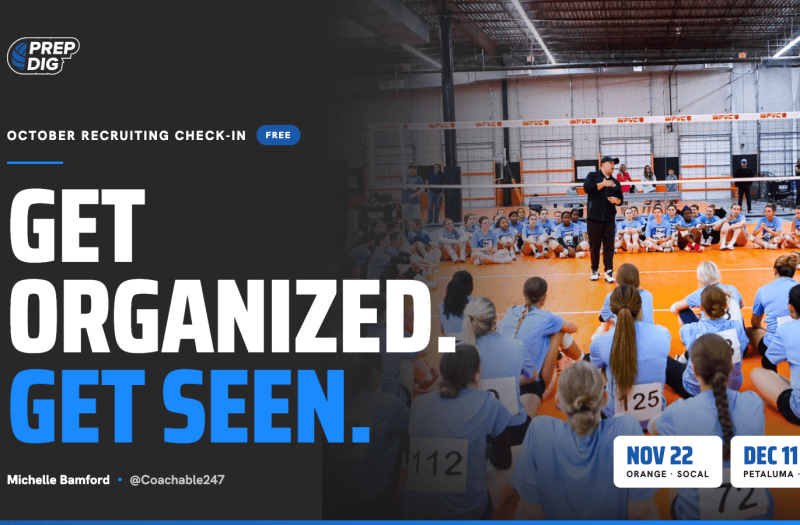
October Check-In: Get Organized Before Club Season Speeds Up
In this article:
I was in the gym in Las Vegas when Mater Dei swept Sierra Canyon to win the Durango Fall Classic. Less than two weeks later, Santa Margarita snapped the Monarchs' 27-match Trinity League winning streak in four sets. And this weekend, some of the best high school programs in the country head to Phoenix for the Nike Tournament of Champions. That's October volleyball. Nothing stays settled for long, and if you've spent any time in a gym lately, you can feel it.
October is also a transition month, and that's what I want to talk about.
Some Club tryouts are a few weeks away. College coaches are in season themselves, watching film between matches and planning their winter evaluation calendars. Some of you are in real conversations with programs. Others are wondering when your process is supposed to start. And almost every family I talk to is juggling the same pile: profiles, film, emails, rankings, showcases, articles and a long list of things someone told them they should be doing.
So this month is about two things that work best together: getting organized and getting seen. The athletes who get the most out of a showcase are the ones who walk in with everything already connected, so the exposure they earn in the gym keeps working for them long after they leave.
Why This October Check-In Is Free
I believe recruiting education shouldn't wait until an athlete starts hearing from college coaches. Months like October, when there's a little breathing room before club season takes over, are when families can build habits that make everything easier later. That's why this check-in is free. If it helps your family, I hope you'll consider becoming a PrepDig subscriber. Your support is what keeps scouts in gyms, articles getting written and showcases running across California.
Exposure Works Best When It Has Somewhere to Land
Here's something I see constantly. An athlete gets written about after an event. She has a highlight video on YouTube, a profile she set up as a freshman, an Instagram she updates when she remembers, and a handful of emails she sent to coaches last spring. Every one of those things is useful. None of them are connected.
When your recruiting information lives in ten different places, you start over every time a coach takes an interest. They find one piece and then have to hunt for the rest. Some will. Many won't, not because they aren't interested, but because they're evaluating hundreds of athletes and the easiest athletes to evaluate get evaluated more often.
Getting organized isn't glamorous. But it's what turns a strong showcase performance into real recruiting momentum, and it's completely within your control.
Make Your Recruiting Dashboard Your Home Base
If you have a PrepDig Player Profile, you have a Recruiting Dashboard, and October is a good month to actually spend time in it.
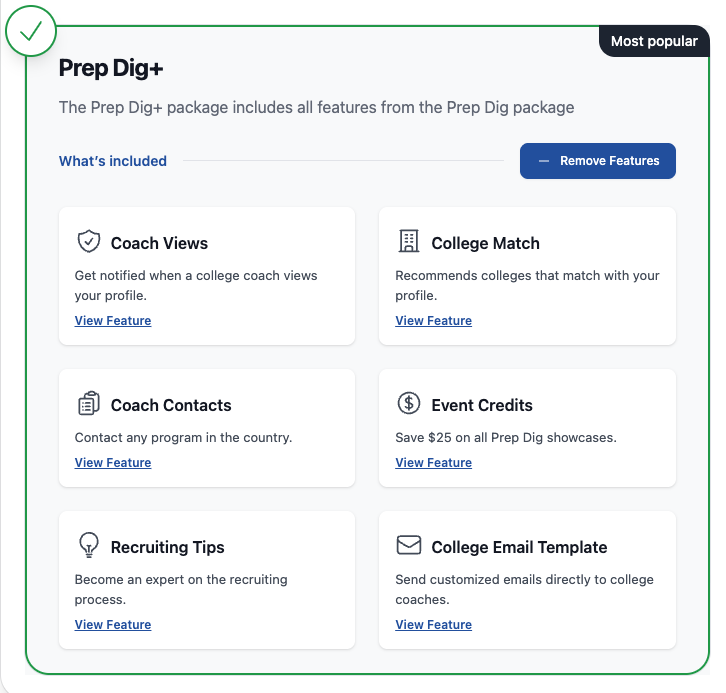
Think of the Dashboard as your recruiting home base. Your Player Profile, the PrepDig articles written about you, your profile activity and your recruiting resources all live in one place. Families should know exactly what's included at each level so nothing surprises you:
Player Profile: Free. Every athlete should have one.
PrepDig subscription: Adds year-round coverage, rankings, Profile Trends (how often your profile is being viewed over time) and Recruiting Tasks (a timeline of what to work on at your stage).
PrepDig+: Adds Coach Views (a notification when a college coach views your profile), College Match, Coach Contacts, College Email Templates, Recruiting Tips and savings on every PrepDig showcase.
What matters more than any single feature is how you use it, and that depends on your graduation year.
A 2030 athlete shouldn't be recruiting like a 2028 athlete. If you're a freshman, the Dashboard is about building a foundation: a complete profile, a first round of film and an understanding of how the process works. Recruiting Tasks are especially useful here, because instead of hearing twenty opinions about what you "should" be doing, you get a timeline built for where you actually are.
If you're an upperclassman, the Dashboard becomes more about signals. Is your profile being viewed more often after events? Are coaches looking at you after an article runs? When you send emails, does engagement change? None of those numbers will tell you where you're going to college. But together they tell you whether your recruiting activity is landing, and that helps you decide what to do next instead of guessing.
Do the Boring Work Before Club Season
This is the least exciting advice I'll give all year, and it may be the most important.
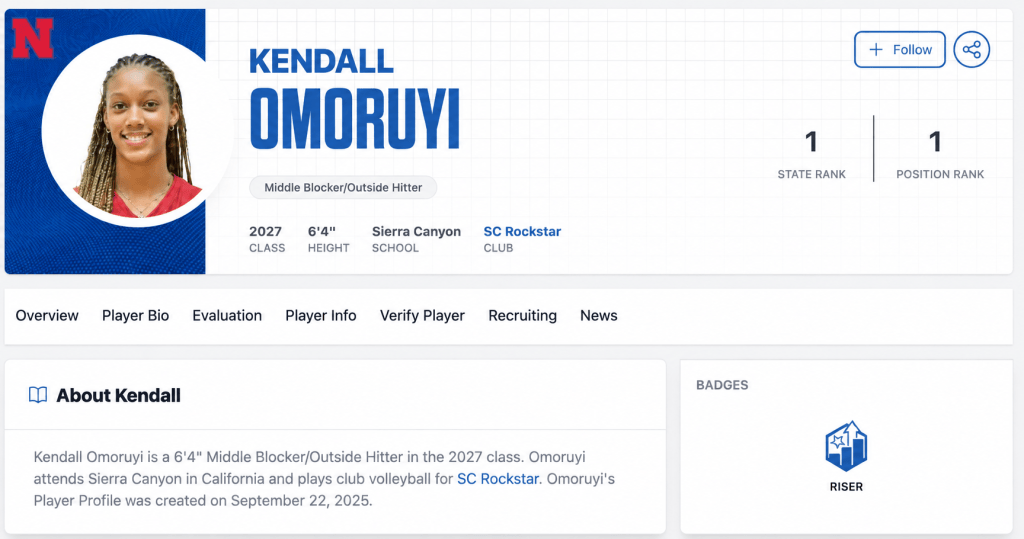
Open your Player Profile and read it like a college coach would. Is your height current? Your position? Your club and high school? Is your graduation year correct? Is your contact information right, and do your social links still work? Is your film from this year or from two seasons ago? Is your profile photo recent enough that a coach would recognize you walking into a gym?
PrepDig has more than 14,000 claimed Player Profiles, and the ones that stand out to me usually aren't the most decorated. They're the ones that are complete and current. When a coach finds you, the athlete on the screen should match the athlete they watch in person.
Once club season starts, this work gets buried under travel and weekend schedules. Do it now, while you still have the time.
Put the Process in Your Pocket
Prep Network launched its new mobile app in September, and PrepDig is part of it. Download Prep Network on your phone, select PrepDig, and you can read articles, look up player profiles and scouting coverage, check rankings by state, position and graduation year, track commitment status, find upcoming events, and follow the players, teams and schools you care about.
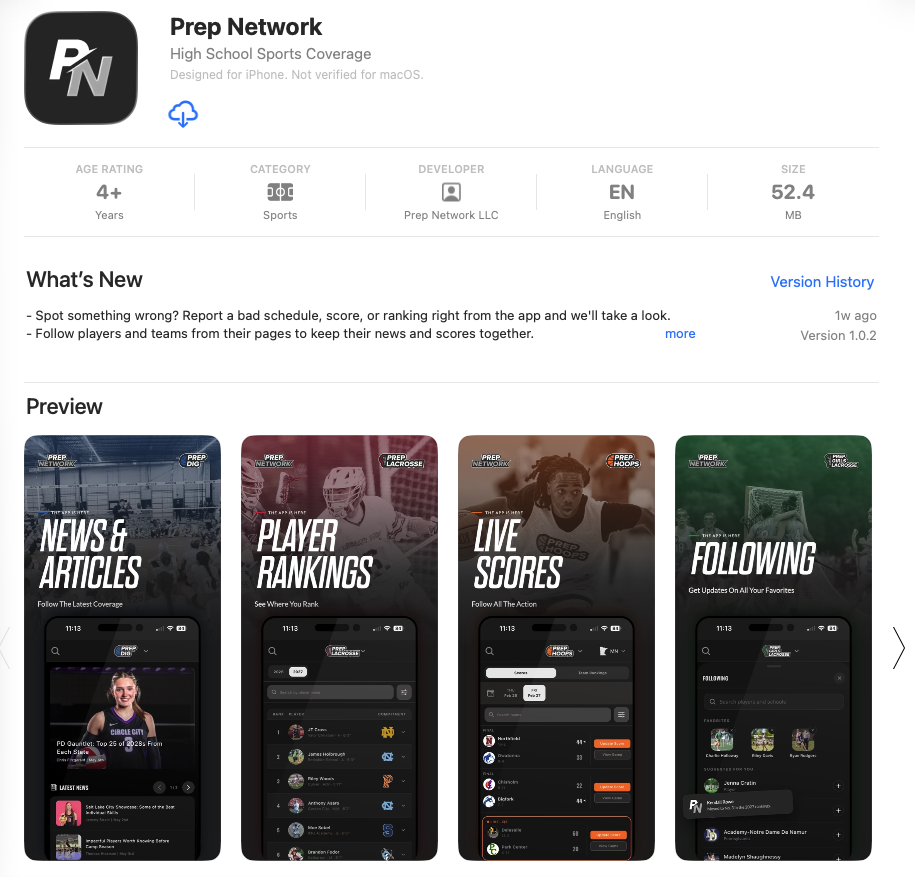
I don't want you to download another app just because I told you to. I want you to use it to become a student of the process.
Recruiting knowledge shouldn't only come from adults telling you what to do. Look up the athletes at your position. Follow players a year or two ahead of you and watch how their games, and their recruiting, develop. When a player you competed against commits, find out where, and think about what that program saw in her. When your own ranking changes, read why.
One of our California athletes,
Nalani Catlin
 Nalani
Catlin
5'9" | RS/OH
Otay Ranch | 2029
CA
, described this better than I can:
Nalani
Catlin
5'9" | RS/OH
Otay Ranch | 2029
CA
, described this better than I can:
"There are articles that you can read about your peers, positive things that they are doing right and ways you can incorporate it into your own journey if that is your path. You can read about athletes that are older than you, as well as the up and coming."
That's exactly the habit I want athletes building. The app just puts it in your pocket.
Use Your Coverage. Don't Just Repost It.
PrepDig publishes more than 400 articles a month, so if you've been written about, you're in good company. What separates athletes isn't whether they get coverage. It's what they do with it afterward.
An article shouldn't be something you post once to your story and forget. It's an independent evaluation of your game from someone who watched you compete. Make sure it's linked to your profile. Include it in your next email to a college coach. Read it closely, because evaluations often say something about your habits you haven't noticed yet.
Kathryn Wulff-Smith
 Kathryn
Wulff-Smith
5'7" | DS/L/S
East Bakersfield | 2027
State
CA
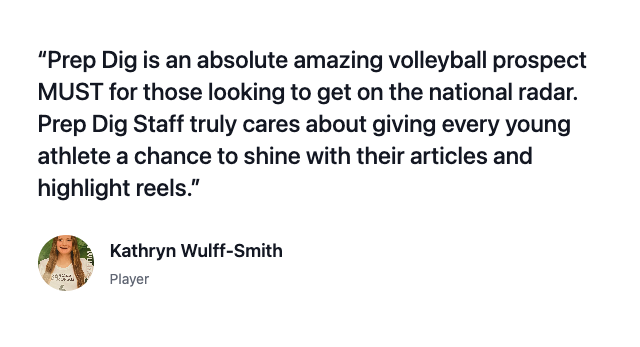
put it simply: "Prep Dig Staff truly cares about giving every young athlete a chance to shine with their articles and highlight reels." That chance only becomes recruiting value if the athlete keeps it working for her.
Kathryn
Wulff-Smith
5'7" | DS/L/S
East Bakersfield | 2027
State
CA
put it simply: "Prep Dig Staff truly cares about giving every young athlete a chance to shine with their articles and highlight reels." That chance only becomes recruiting value if the athlete keeps it working for her.
Exposure Builds in Layers
One of the biggest misconceptions in recruiting is that an athlete will eventually find the right tournament or showcase and everything will change overnight. It happens sometimes. Much more often, recruiting builds through layers.
A coach sees your name in an article. Then they look at your profile. Then they watch your film. Then you show up again at an event, or another coach mentions you, or your club coach sends your information. Then they come to watch you live. None of those touchpoints alone creates an offer. Together, they create familiarity, and familiarity is what moves an athlete from a name on a list to someone a coach wants to talk to.
A PrepDig parent recently shared what that looked like for his daughter, Mia. She was recognized as a Top Performer at a PrepDig Stock Up showcase. An in-depth article followed about her play, her enthusiasm and her mental toughness. When the family started talking with college programs, several coaches brought up that article on their own. Mia went on to receive offers across divisions and committed to a Division I program in Florida.
The showcase put her in front of the right people. The article gave coaches something to remember. Mia did the rest, and each layer made her a little easier to find and a little harder to forget.
That's why everything in this article connects. Your profile, your coverage, your film, your emails and your live evaluations should all tell roughly the same story: this is who I am as a player right now.
All three SoCal sessions are on Sunday, November 22, at ProPlay Volleyball Club in Orange, and each one is built for a different stage.
Up Next: SoCal (2031-2033), 9:00 a.m. to 12:00 p.m.
For our youngest athletes, Up Next is an introduction. It's a chance to get comfortable competing in an evaluation environment, learn how a showcase runs and build confidence around new players. There's no recruiting pressure at this age. The goal is to learn, compete and have fun doing it.
Exposure Tour: SoCal Session 1, Freshman (2030), 1:00 to 4:00 p.m.
Freshman year is for building, not stressing. You don't need a college list at 14. You do need to start learning how this works. Come with a completed profile, start building film, practice introducing yourself, and pay attention to what separates the best players at your position. That last part is something you can only really learn by competing next to them.
Exposure Tour: SoCal Session 2, Upperclassmen (2027-2029), 5:00 to 8:00 p.m.
For upperclassmen, the purpose changes. The 2028 class is in an important window, 2029 is coming quickly, and there are still 2027 athletes looking for the right fit. Come with intention. Know what kinds of schools interest you. Have current film. Make sure your profile is correct before you walk in, because if someone looks you up that night, that's what they'll find.
Every session includes standardized athletic testing through Universal Speed Rating: vertical jump, broad jump, a 5+10 fly sprint and the 5-10-5 shuttle. That data feeds a national leaderboard, so you can see how you measure against athletes at PrepDig showcases across the country, not just the athletes in your gym.
Northern California, the Exposure Tour is coming to you on Friday, December 11, at AVC North in Petaluma, from 7:00 to 10:00 p.m., for the 2027 through 2030 classes.
The timing is the point. This is a chance to be evaluated before most club teams have even played their first tournament, which means you walk into qualifier season already in the conversation.
But your work shouldn't start when you walk into the gym. Before the event, update your profile, have your film ready, and search your own name so you know what a coach or scout will find. Afterward, follow the coverage. Read any evaluation or article that includes you, link it to your profile, and put it in your next email. The event is one evening. What you do with it can last all season.
What I'll Be Watching in Those Gyms
I'll be in the gym in Orange and in Petaluma, and I'll tell you now what I'm looking for, because it's probably not what you think.
The athletes who leave an impression on me aren't always the ones with the biggest swing of the night. They're the ones talking on every play. They transition hard when the ball isn't coming to them. They're still competing in the last scrimmage when everyone's tired. They make a mistake, and the next rep looks better instead of worse. They make the player next to them better. Their body language looks the same down four as it does up four.
You can't fake those things for three hours. You can only build them before you get there. That's why development always comes first. Exposure just shows people what you've built.
And yes, come say hi. Tell me your name, your grad year and your position. I'll ask how you're doing, and I mean it.
Parents, Hand Over One More Piece
At some point, recruiting has to start belonging to the athlete.
Parents can research. Club coaches can advocate. PrepDig can evaluate, write and provide tools. College coaches can recruit. But eventually it's the athlete who has to communicate, compete, ask questions and decide where she wants to spend four years. The athletes who handle that best are usually the ones who were given small pieces of the process early, instead of all of it at once at 17.
So this month, hand her one more piece. Maybe she updates her own Player Profile. Maybe she downloads the Prep Network app and starts following players at her position. Maybe she researches five college programs and tells you what she learned. Maybe she registers for an event and walks in knowing exactly what she wants scouts to see. And if she's old enough and ready, maybe she writes her first email to a coach, in her own words.
The recruiting process feels enormous when you try to solve all of it at once. You don't have to. Build the profile. Learn the process. Get evaluated. Use your coverage. Watch the signals. Keep getting better. Then take the next step.
Club season will be here before we know it. Let's make sure you walk into it organized, prepared and easy to find.
I hope this month's check-in gives you the confidence to approach the next phase of your recruiting journey with greater purpose and a clearer understanding of what comes next. I hope our paths cross in a gym this fall, and I look forward to continuing to share the athletes, stories, and lessons that make our volleyball community so special.
If you're ready to continue learning alongside us, you can join the PrepDig community with 30% off using my code COACHABLE247. Your subscription helps support the evaluations, articles, showcases, and recruiting education that allow us to continue shining a light on athletes across the country.
Thank you for making today's wins matter — one article, one player, one memory at a time.
~ Michelle Bamford @Coachable247